
The American Pawpaw is a cold hardy fruit native to North America. It is perhaps one of the most cold tolerant tropical-tasting fruits around. Flavour varies fruit to fruit but it generally tastes somewhere between a mango and a banana. It grows with ease in almost all of New Zealand when provided with reasonable drainage and shade while young.
Taste: Pawpaw generally tastes like a mix of pineapple, banana and mangoes. It has a creamy custard-like texture. The exact taste varies between trees and people; however, most people love them and almost all trees grown from good seed will make a tasty fruit.
Time to fruiting: Pawpaw trees grown from seed generally take 5-7 years.
Pollination: Two trees are required for cross-pollination. Single trees may not be very productive.
Preferred conditions: These are commonly started in deep pots for a year or two (to accommodate the long taproot) or directly sown into the ground and protected from direct sun in the first couple years. These will tolerate clay but prefer well-draining soils and can tolerate heavy shade but will fruit more with a higher level of sun. Avoid starting these trees in full sun; they will grow much better in shade to begin with.
Cold tolerance: High. These trees go dormant through the winter and require a degree of coldness to fruit (though there are very productive trees in Northland). They enjoy cold winters and hot summers.
Maintenance: The tree grows into an upright pyramidal shape and requires little pruning except to your desired size. This is best done while the tree is dormant for the winter.
Check out our American Pawpaw seedlings.
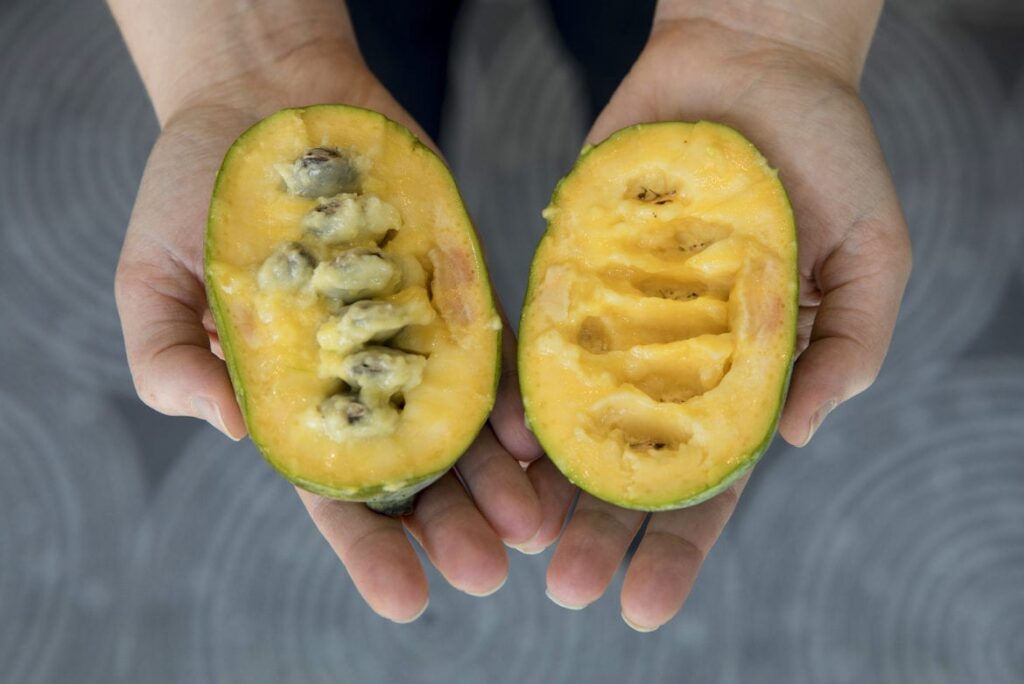

I have been lucky enough to taste a number of NZ grown Asimina triloba from different locations. These are hands down one of my favourite fruits. Everything about them is great, not only the taste, they are really attractive fruit and nicely sized.
I can confirm James’ descriptions of taste and texture to be accurate. The first time I ate them I was blown away, I couldn’t believe how this locally grown fruit, could taste so good. I also note a strong passionfruit flavour, except without any of the sourness that passionfruit can have.
Anyone who loves passionfruit, or mangoes, will love this fruit. Everyone I have shared the fruit with has loved it. This is one of several fruit that made me appreciate that we are quite lucky with the growing climate that we have locally.