Despite its very tropical looks, it is a plant that is well-adapted to growing in subtropical climates. Aside from frost protection, excellent draining potting mix or soil is the key to them thriving in the warmer months and surviving the wet and cold winters. I personally know of trees fruiting in Gisborne, Tauranga, Auckland, Kerikeri and of course in the Far North. In colder regions we HIGHLY recommend growing these in containers.
Sun: Starfruit can tolerate full sun to semi-heavy shade. Trees in heavy shade seem to fruit quite well but fruit production is heavier in full sun. They benefit from moderate wind protection, such as being planted among other trees.
Fertiliser and Watering: Seedlings can be fertilised lightly after a few months of age and from then on like a regular fruit tree with a standard fertiliser. They are not particularly prone to root problems from overwatering but for best chances don’t water them when the soil is still quite moist.
Cold Hardiness: They can tolerate to about -1c. Possibly colder when more mature but make sure to protect trees from frost especially while younger. I know of various trees fruiting in the North Island, but there is potential for them to even grow in the South Island using pots or greenhouses. Cold hardiness will increase as the tree ages – if you are in a colder area and would like to plant the tree in the ground rather than in a container, then growing the starfruit in containers for the first few years may help.
Pollination: Lone trees can fruit well but benefit greatly from pollination – any two seedlings will pollinate each other perfectly. Seedlings vary in degrees of self-fertileness.
Time to fruiting: Generally, they begin to flower/fruit at about 3-5 years from seed. This is variable and happier trees tend to fruit sooner, while on the flip side heavy pruning may also trigger fruiting on more mature trees.
Container Growing: These are very suited to containers. I would recommend growing all of these in pots for the first few years (or permanently). Once they are a few years old they are hardier and will respond better to being planted in the ground. Any quality potting mix will do but add an amendment such as perlite if they appear to be holding water too long and always check soil is properly dry a few cm below the surface before watering. Gradually pot them up.
Varieties we grow:
Kari: Possibly the sweetest type. Juicy, sweet, citrus-like flavour.
Fwang Tung: Very sweet Thai selection known for its pale-coloured fruits that taste of green apple.
Giant Siam: Produces extra-large fruits with a good typical starfruit flavour.
Sri Kembangan: A Malaysian variety that produces very sweet and dark-yellow fruits. Similar to Kari but larger.
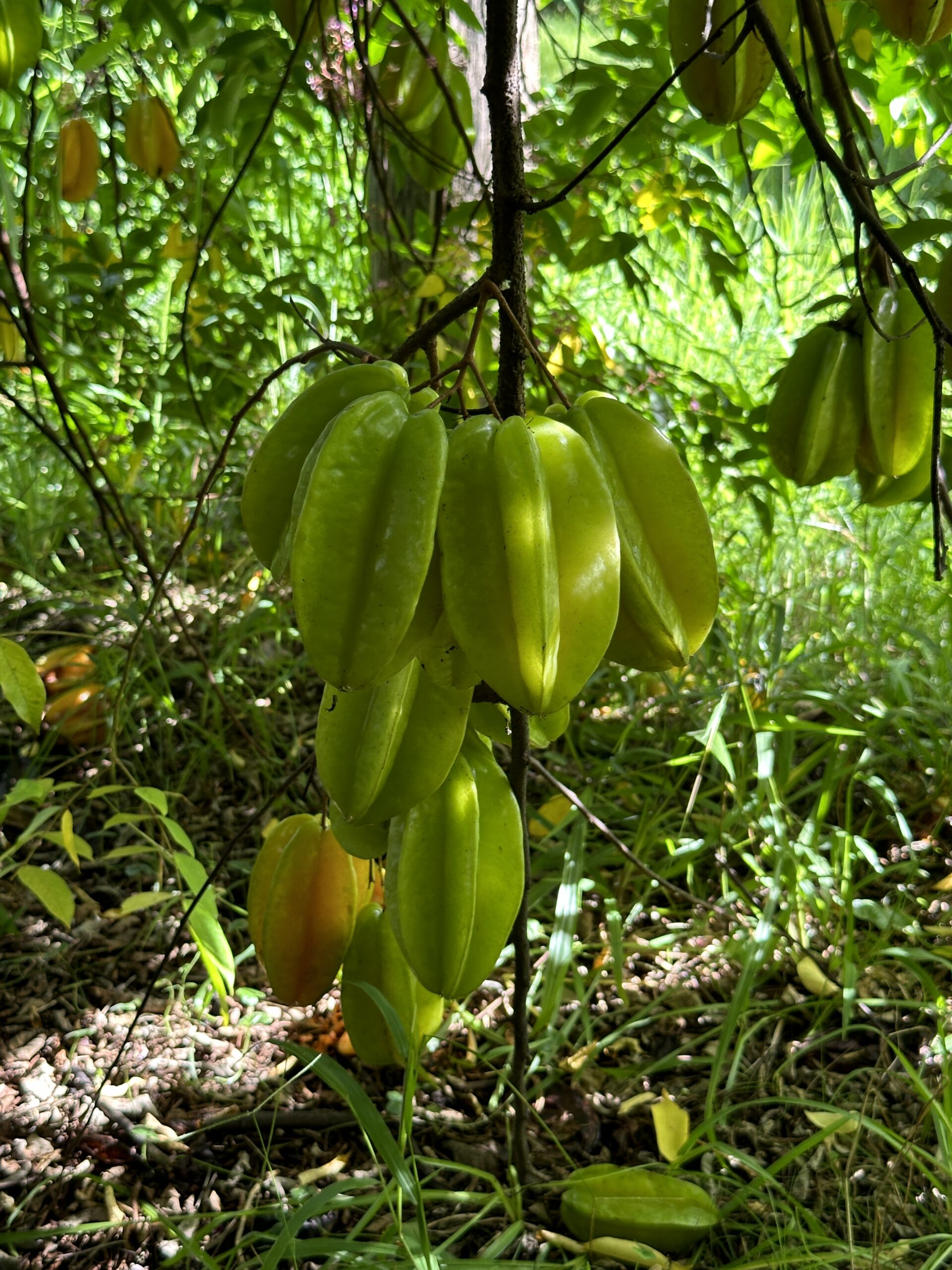
Below: A cluster of Kari starfruit in a tree we took seed from in NSW, Australia.